A safe, enjoyable online dating experience for members of the sapphic community
CORE CONCEPT
Founder and Product Designer
My RoleDeveloped the concept from initial idea to investor-ready pitch, including market research, business model, and product vision. Presented to VC investors who validated the concept but identified market size as a barrier to the returns required at that funding stage. Made the decision not to bootstrap given the constraints, and used the experience to develop a working understanding of what it takes to take a product from zero to investment-ready.
ResultsFigma, Lyssna
ToolsWorking independently, I took the business from initial concept through to investor pitch. This included:
Discovery & validation: market research and competitor analysis to assess opportunity and positioning
User research: conversations with potential customers to validate the problem and test assumptions
Product design: wireframes and prototype to communicate the product vision
Brand & identity: developed the visual brand from scratch
Business model: defined pricing, revenue model and go-to-market strategy
Pitch: created and presented a full pitch deck to VC investor
ProcessAs a solo founder without a technical co-founder, I focused my design work on the core user journey and the queue experience that would make or break the launch strategy.
OVERVIEW
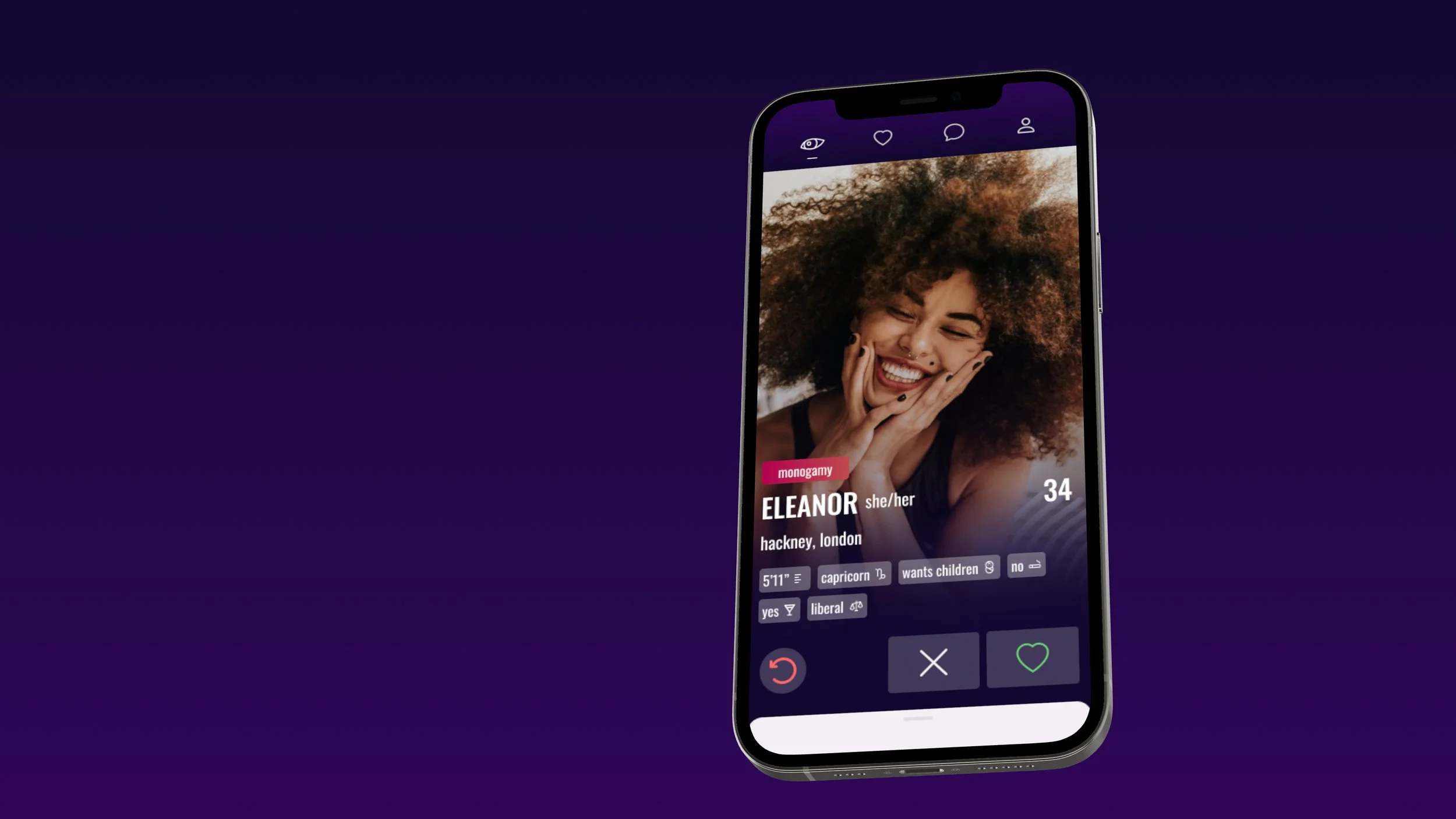
sapphed was a dating app concept for LGBTQ+ sapphics — designed to address the significant gap in the market between generic dating apps and the specific needs of queer women and non-binary people.
The first dating app for LGBTQ+ sapphics that doesn't suck.
BACKGROUND
Spotting the trend - demand for sapphic spaces has never been so high
La Camionera
When La Camionera, a sapphic tapas restaurant for 25 covers, opened on broadway market, the whole street was closed down by hundreds of sapphics who gathered outside in support. they now have a permanent location that was given £80,000 of funding by the community.
Butch, please!
Butch please (a popular sapphic night) had to move from the royal vauxhall tavern to the much larger clapham grand to keep up with demand. it still sells out every single event.
BBC’s “I Kissed A Girl”
The first episode doubled the launch of “i kissed a boy”, in terms of overnight launch and consolidation. clips of the show got 15m views across all BBC social media accounts.
COMPETITIOR RESEARCH
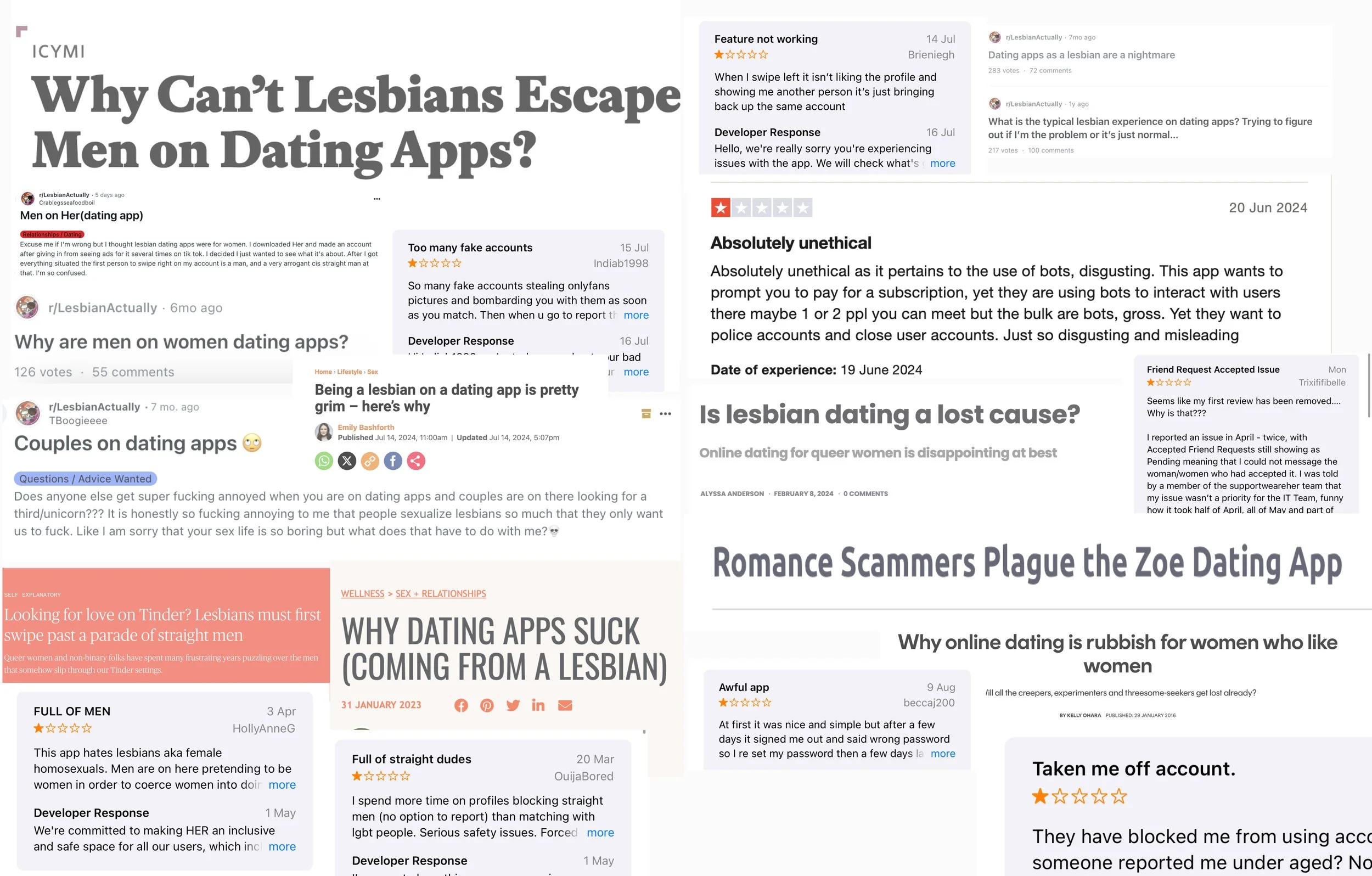
There are four key problems with existing dating app solutions for the sapphic community
Misappropriation and infiltration by men and couples
Speak to any queer woman and you’ll hear how dating apps are rife with harassment, fetishisation and interference from couples or men.
Poor, buggy interfaces and experiences
Users of leading sapphic dating apps including Her and Zoe complain of buggy interfaces, fake profiles and scammers.
Rife with harassment and fetishisation
More than half (56%) of LGBTQ online daters have received sexually explicit messages or images without solicitation.
Impossible to weed through
Even if the profile isn’t fake or a scammer, the chances are that they are not looking for the same thing as you (monogamy, non-monogamy).
THE OPPORTUNITY
Sapphic daters are underserved. Current dating app users skew heavily male, 56% male to 39% female, and mainstream platforms are built to reflect that. Sapphic users are left scattered across apps with a poor reputation, or sitting as a small minority on platforms where their needs go unmet.
The appetite to pay for a better experience is proven: 25% of dating app users globally pay for premium features, spending an average of £20 per month. The market generated over $6 billion in revenue in 2025.
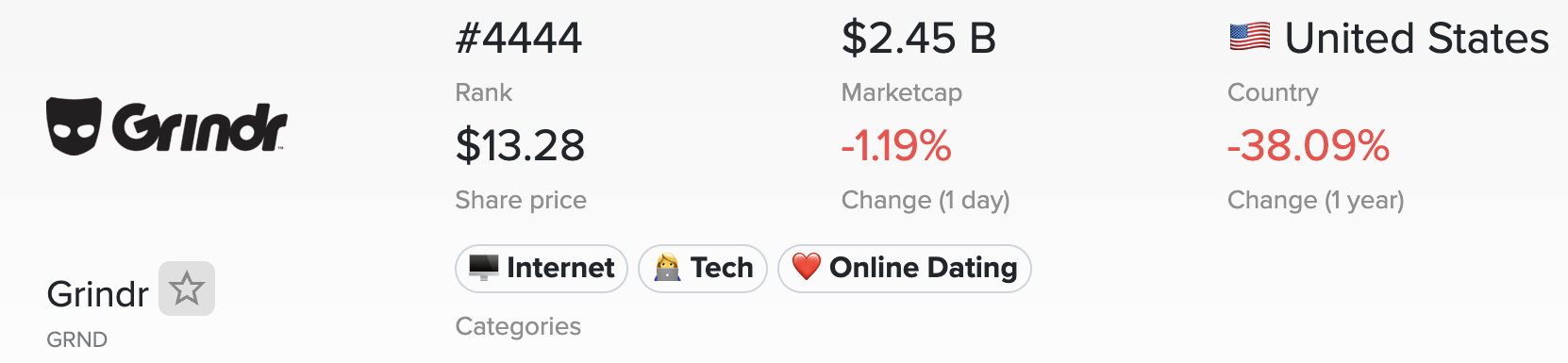
Meanwhile, Grindr, built for a similarly underserved queer community, is now worth almost $2.5bn.
The opportunity for a product that genuinely serves sapphic daters is significant. No one has built it yet.
MARKET POSITIONING
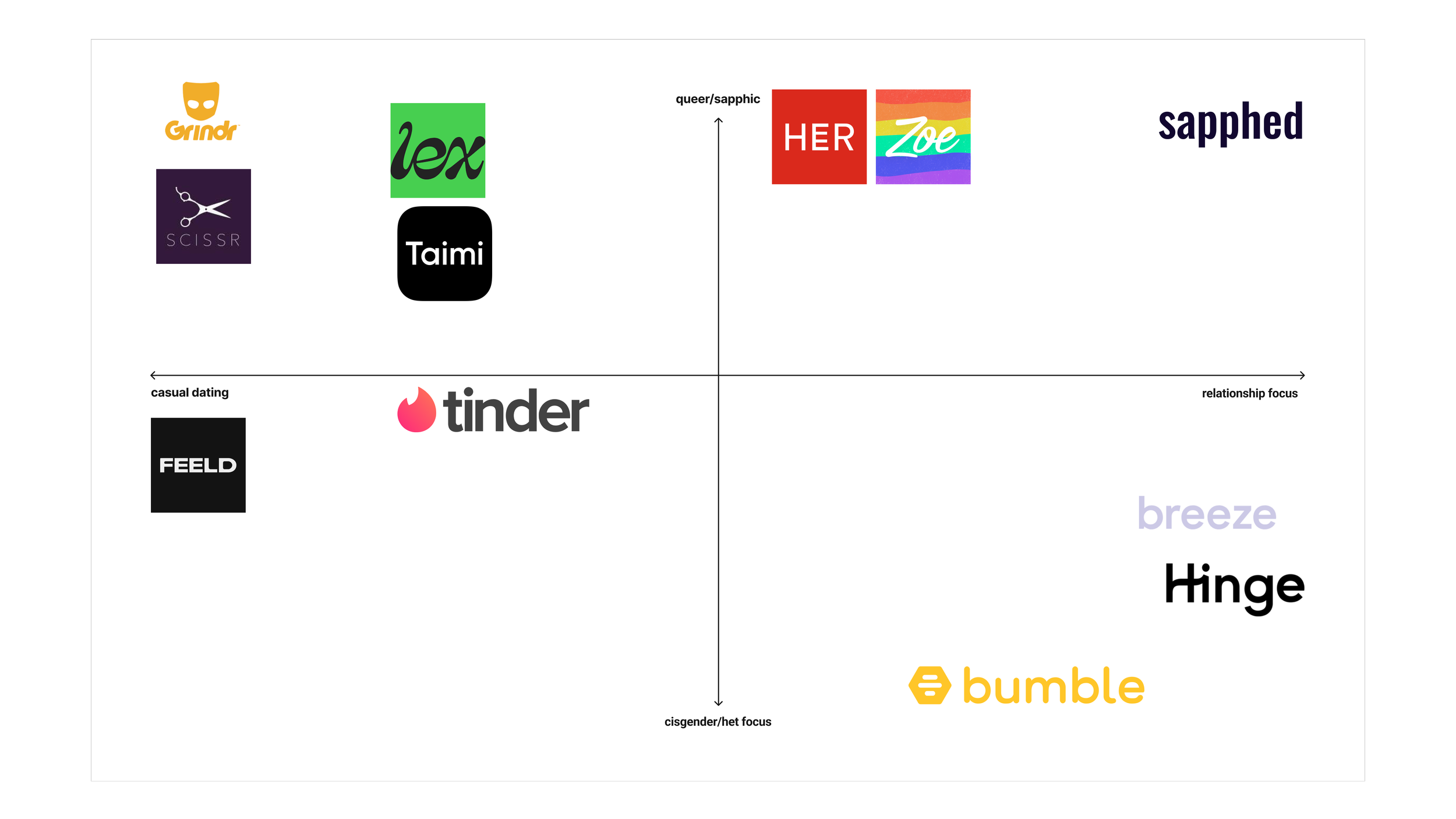
Relationship focus
While other queer apps lack focus, sapphed is designed to help users find a relationship. Whether that’s a monogamous or non-monogamous relationship.
THE SOLUTION
sapphed - The first dating app for LGBTQ+ sapphics that doesn't suck.
Community led, invite only access
Invite only membership ensures that sapphed is only accessed by the people who should be there and that they’re all vouched for. Any (cis) men or couples will be removed, as will their inviter.
Find what you’re after
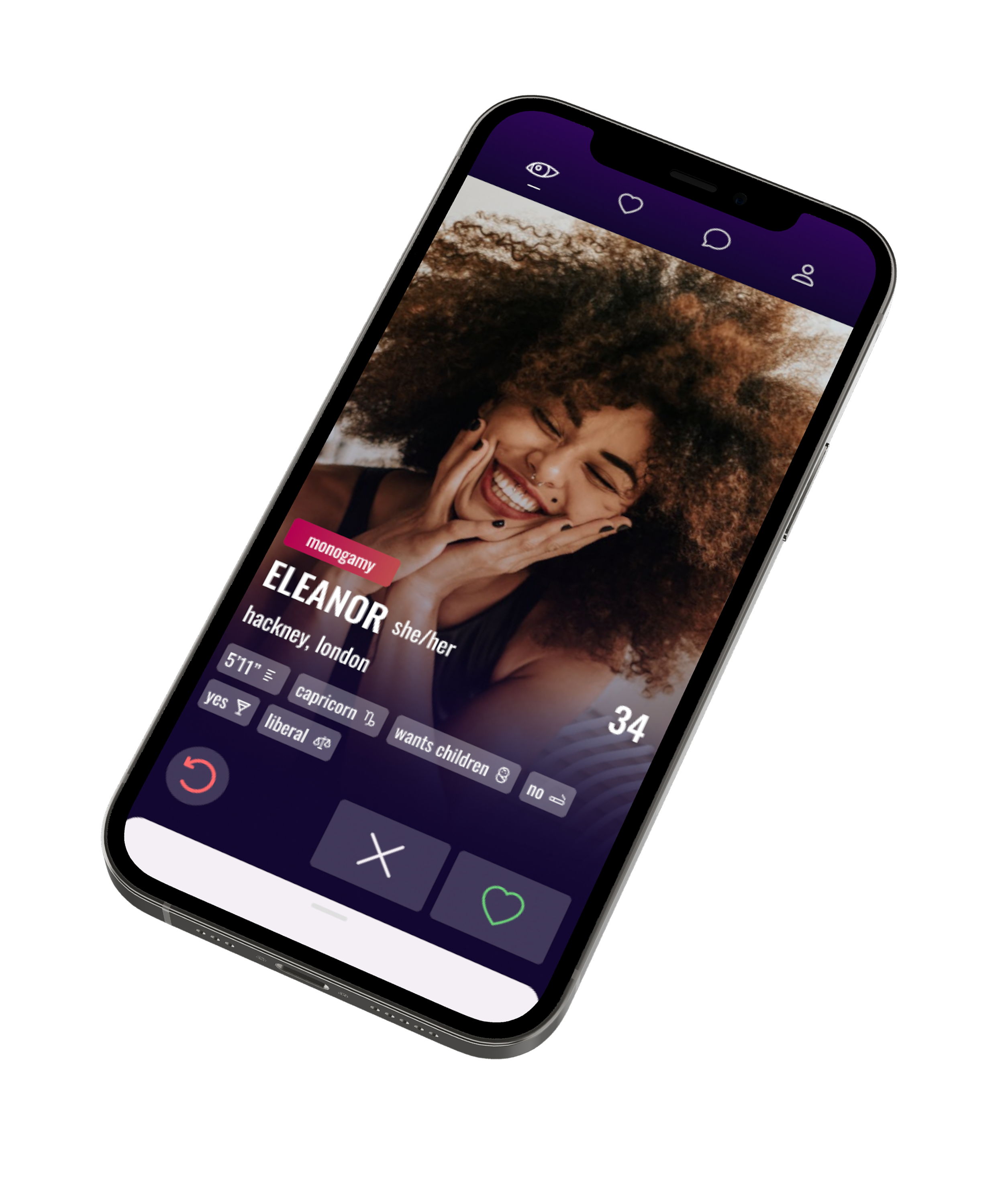
sapphed profiles are designed so that users can display exactly what they’re after - whether that’s monogamy or something non-monogamous - when it comes to finding a relationship there’s no time wasting here.
High-quality experience
sapphed’s focus is on creating a high quality dating app experience, free from fake profiles, scammers and glaringly obvious bugs.
Policy of respect
No screenshots and no messaging before a match. Our rule is simple, respect others and if you don’t like someone, don’t send them a like.
DEVELOP
Onboarding
Building a waitlist
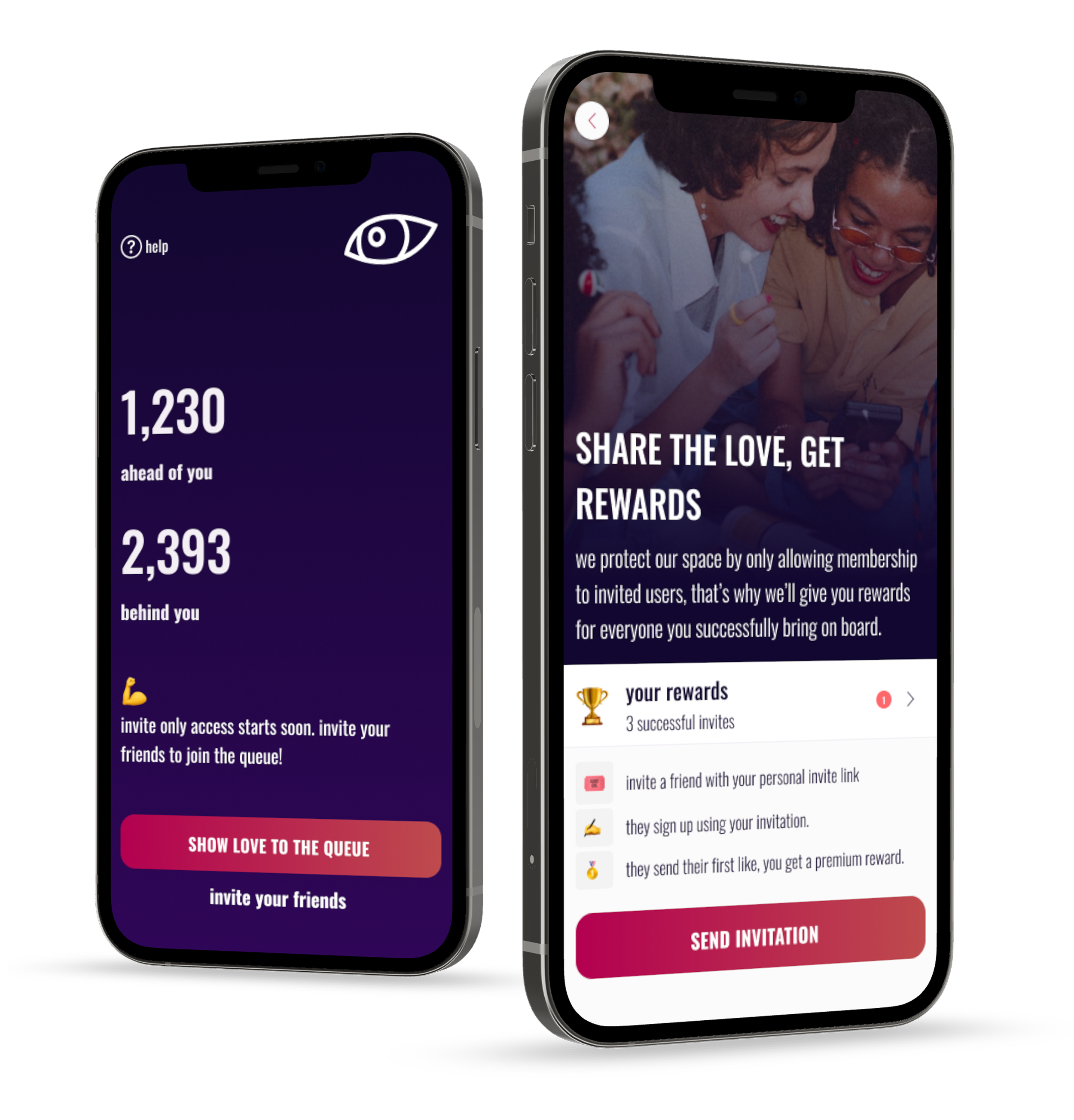
As a solo founder without a technical co-founder, I focused my design work on the core user journey and the queue experience that would make or break the launch strategy.
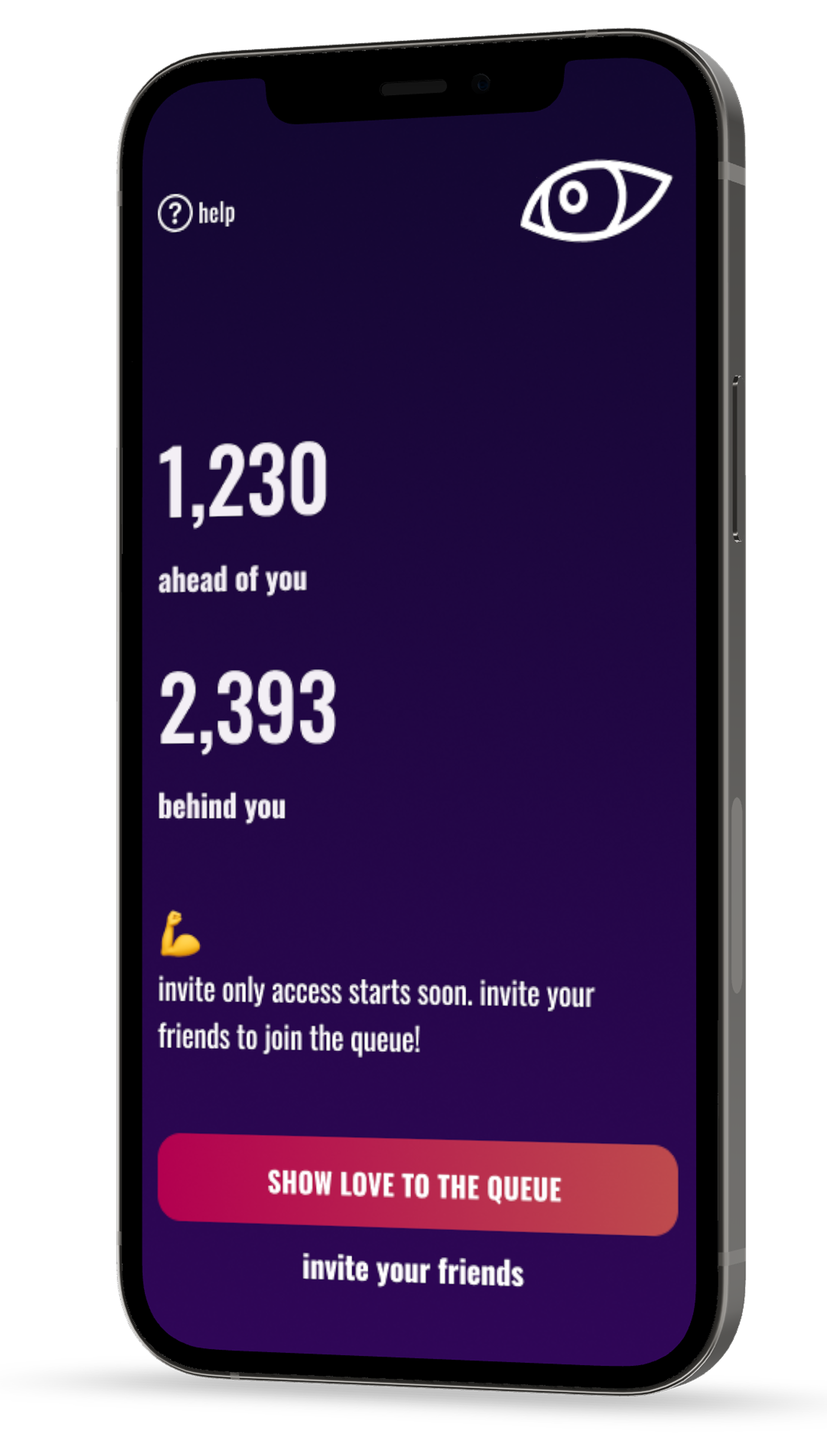
Dating apps live or die on critical mass. A sparse app, or one where you see the same profiles on repeat, is one users delete and never return to. Before launching publicly, I needed enough users on the platform to make the experience worthwhile from day one.
To solve this, I designed a queue. Users would complete a simple onboarding flow and join a waitlist, with the plan to launch in London once around 3,000 users had signed up.
To make the wait feel alive rather than static, I added a "send love to the queue" button. Users could send hearts that appeared on the screens of everyone else waiting. It also gave me a practical advantage: by simulating hearts floating up the screen automatically, I could create the impression of an active, growing community before the app had formally launched.
Prototype
PREPARING TO PITCH
Estimated market size & market share by 2028
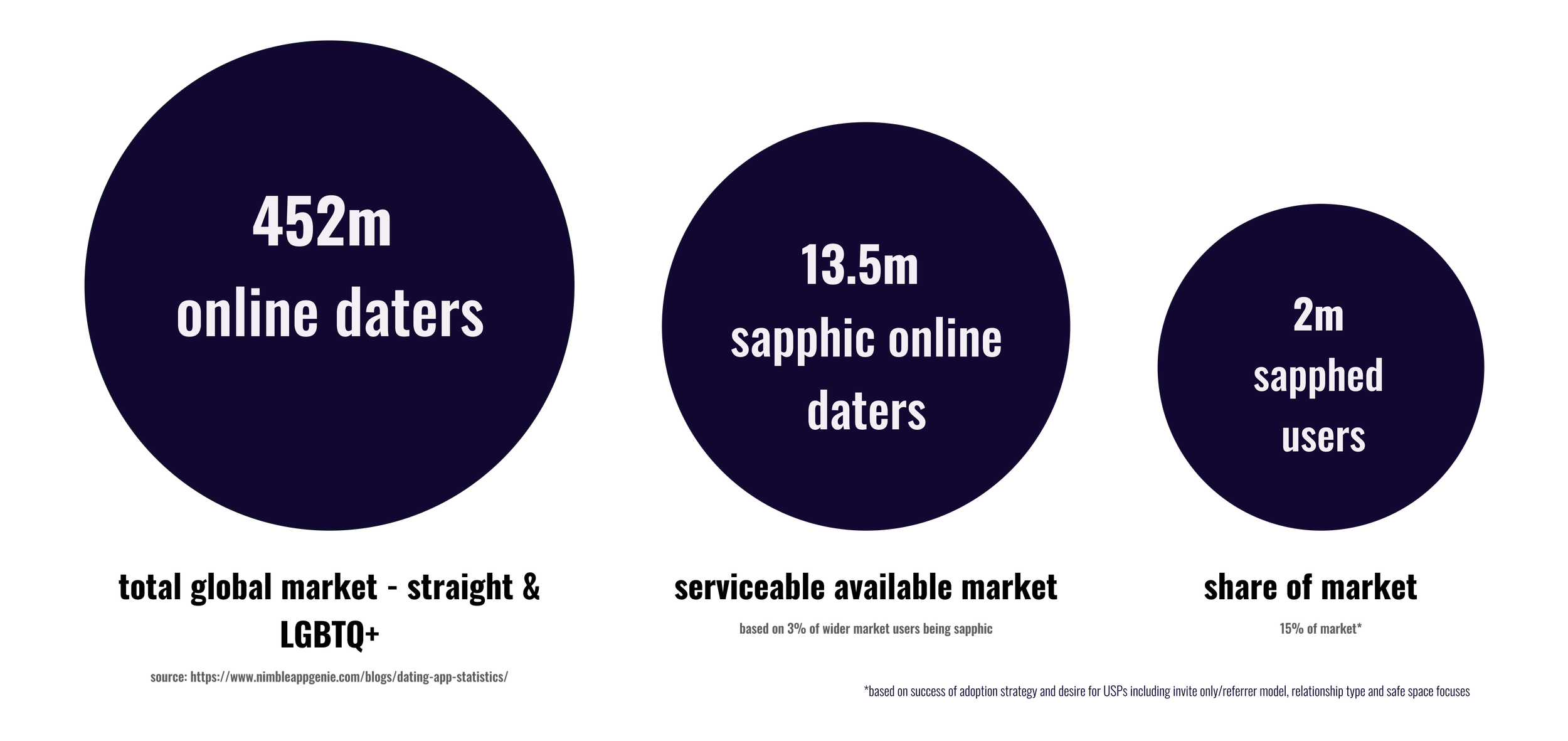
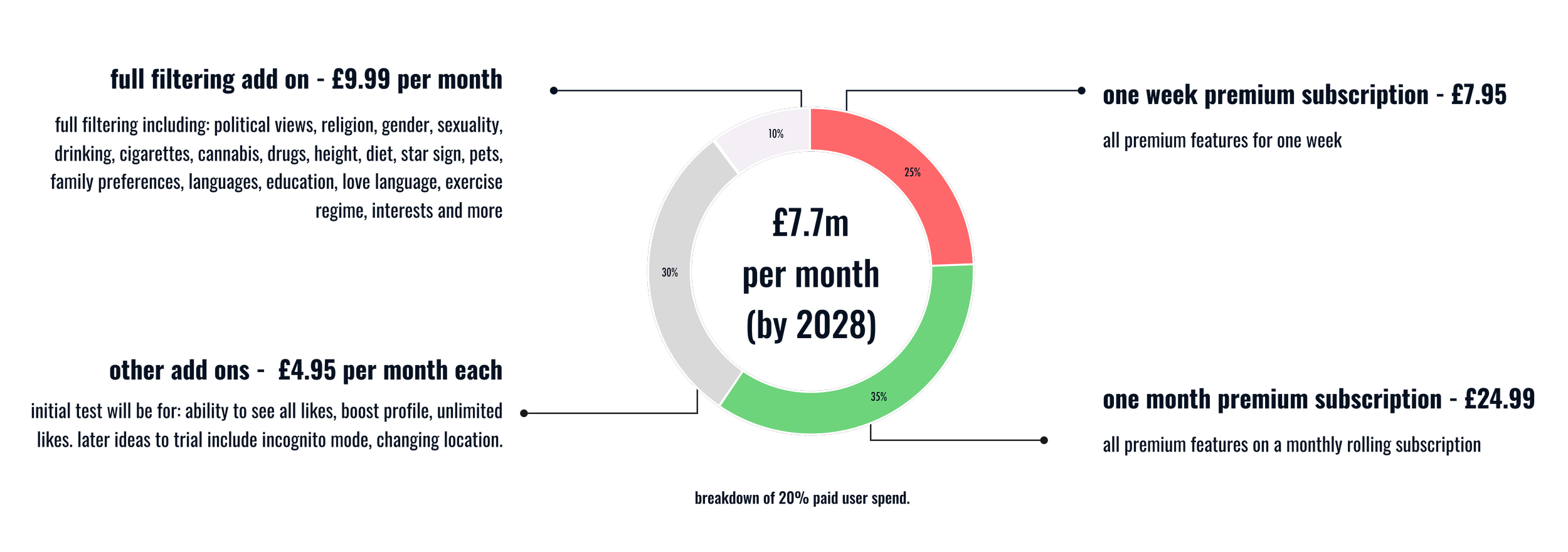
sapphed was designed around a freemium model, with free core features and optional paid upgrades targeted at users actively looking for a relationship rather than casual browsing.
Approximately 25% of dating app users globally pay for premium features. At sapphed, we believed that with affordable pricing and a motivated, relationship-seeking user base, we could achieve 20% paid users — a conservative target given the market benchmark.
Subscriptions
One week premium: £7.95
One month premium: £24.99 (rolling)
Add-ons
Full filtering: £9.99 per month. This was a key differentiator for the sapphic community — filters included political views, religion, gender, sexuality, diet, love language, family preferences and more. These are meaningful signals for a community where values-matching matters.
Additional add-ons at £4.95 per month each, including the ability to see all likes, profile boosts and unlimited likes. Later-stage ideas included incognito mode and location changing.
Based on projected user growth, this model was forecast to generate £7.7m per month by 2028.
BUSINESS MODEL
Freemium, premium and add-ons
THE PITCH
StartOut and Market One Capital
sapphed was pitched to VC investors via StartOut, a US-based organisation supporting LGBTQ+ founders, and to Market One Capital. Both responded positively to the concept and the business model. The primary barrier to funding was market size — the sapphic dating market, while underserved, was considered too small to meet the return thresholds required at VC level.
During the process, Liv Little, founder of gal-dem and author, expressed interest in joining the business. Her enthusiasm for the concept was a meaningful signal that sapphed was addressing a real and felt gap in the market.
Taking sapphed from idea to investor pitch as a solo founder reinforced how closely product thinking and business strategy are connected. A good idea and a fundable idea are not always the same thing, and market size is as important a design constraint as any UX problem.
If I were to revisit it, I would explore whether broadening the scope, either geographically or across the wider LGBTQ+ community, could address the market size question.
WHAT I LEARNED